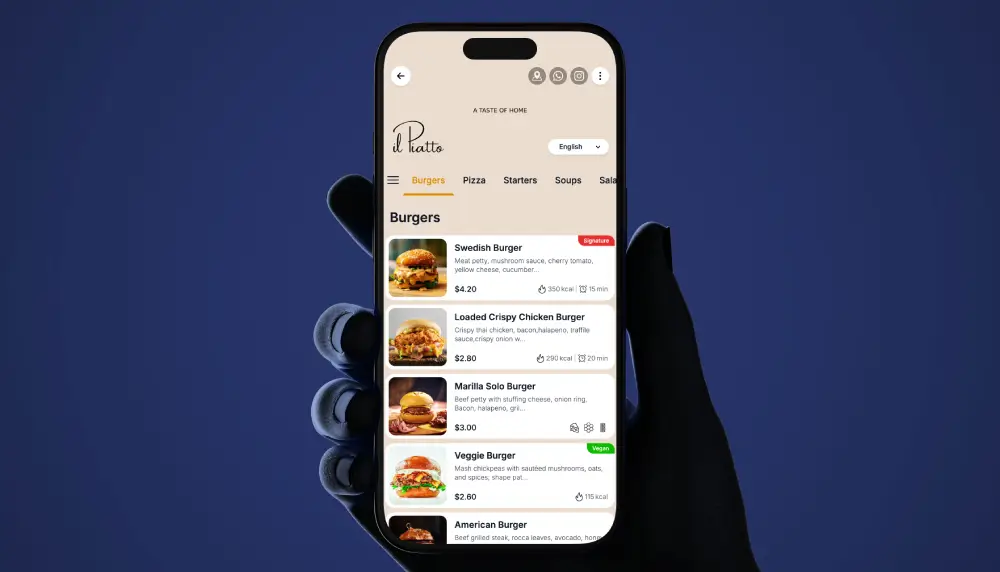
If you run a restaurant or cafe in Saudi Arabia, the Saudi Food Show 2026 is where this year’s F&B shifts show up first. Here are the dates, venue and floor plan logic, what buyers will ask, and how a compliant digital menu fits your post-show plan.
Quick facts
- Dates: 27–29 September 2026
- City: Jeddah
- Venue: Jeddah Superdome
- Read more
When and where is the Saudi Food Show 2026
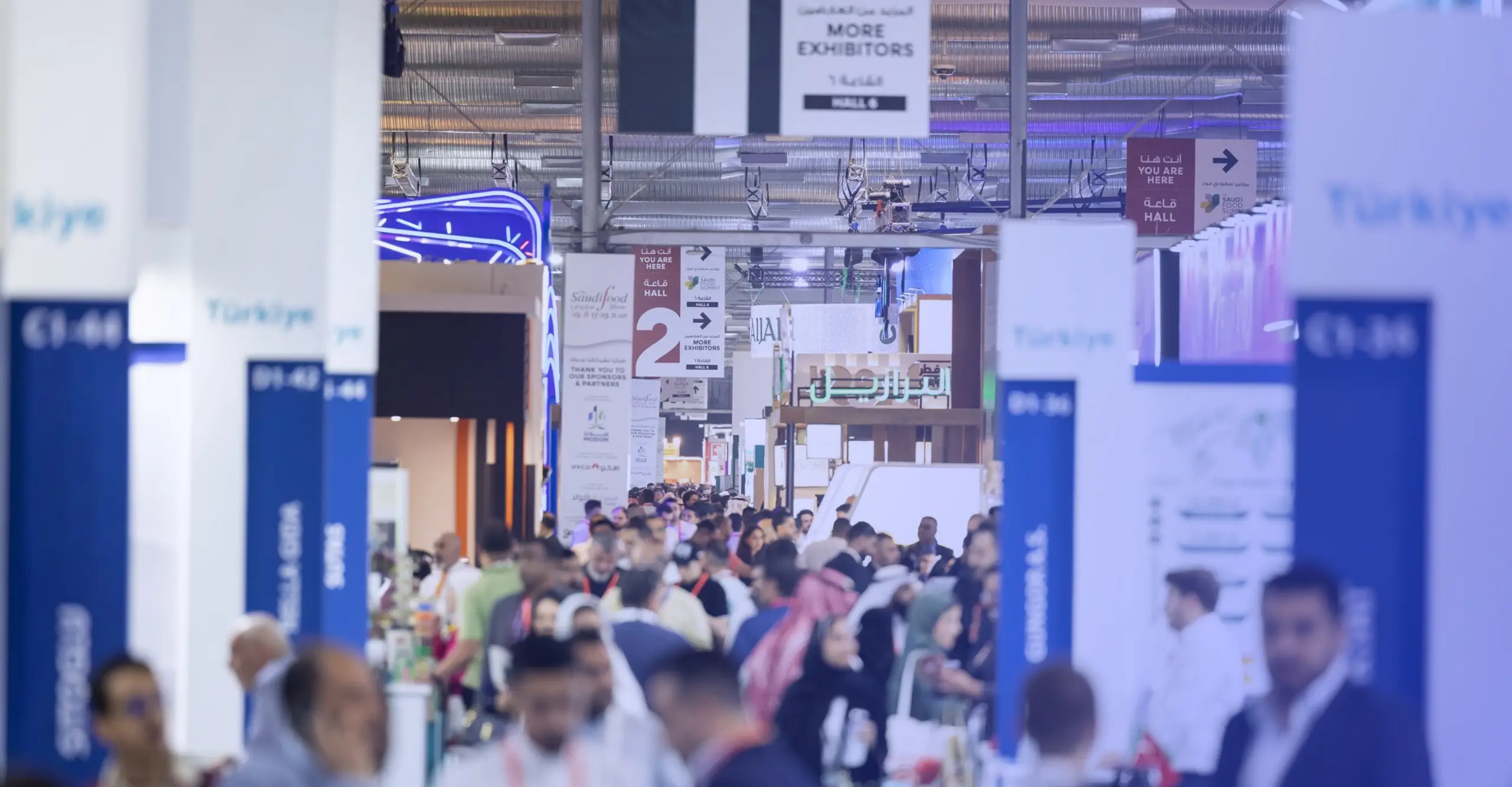
The Saudi Food Show 2026 is scheduled for 27–29 September 2026 at Jeddah Superdome. Note that the 2026 edition reportedly moves cities from previous years, so confirm on the official site before you book travel.
Why this show matters for operators (not just suppliers)
Saudi hospitality is expanding under Vision 2030, with the Ministry targeting 150 million annual visitors by 2030. More traffic means pressure on throughput, consistency, and training. Hiring mixes are changing as tourism grows, which puts a premium on simpler onboarding and standardized guest experiences across multi-branch operations. Expect conversations on practical outcomes: higher check size, shorter wait times, smoother audits, and minimal hardware.
The 2026 lens: three forces shaping your plan
- Regulation: SFDA tightened menu rules in 2025. Restaurants and cafés must display calories, caffeine values, high sodium warnings, and activity equivalent labels on both printed and digital menus. If your dining menu can’t show these fields clearly, you will struggle.
- Guest behavior: people expect to scan, browse, and decide in seconds. A static PDF or blurry photo slows decisions. A structured QR menu enables filters, modifiers, and accurate pricing.
- Multi-outlet growth: chains are opening in malls, boulevards, airports, and hotels. Centralized control of a mobile menu keeps seasonal updates and regional pricing simple.
What buyers will actually ask at your stand
Expect direct, operational questions:
- Will your QR menu load fast on 4G in a crowded mall on a Friday evening
- Can managers hide a sold-out item mid-rush without calling support
- Can you print bilingual Arabic/English QR cards for dine-in, in-room, and lounge use
- Can nutrition and allergens sit next to each item instead of in a separate PDF
- Can we go live this week rather than next quarter
If your answers are yes, you will book meetings.
The role of a QR menu in Saudi Arabia, beyond contactless
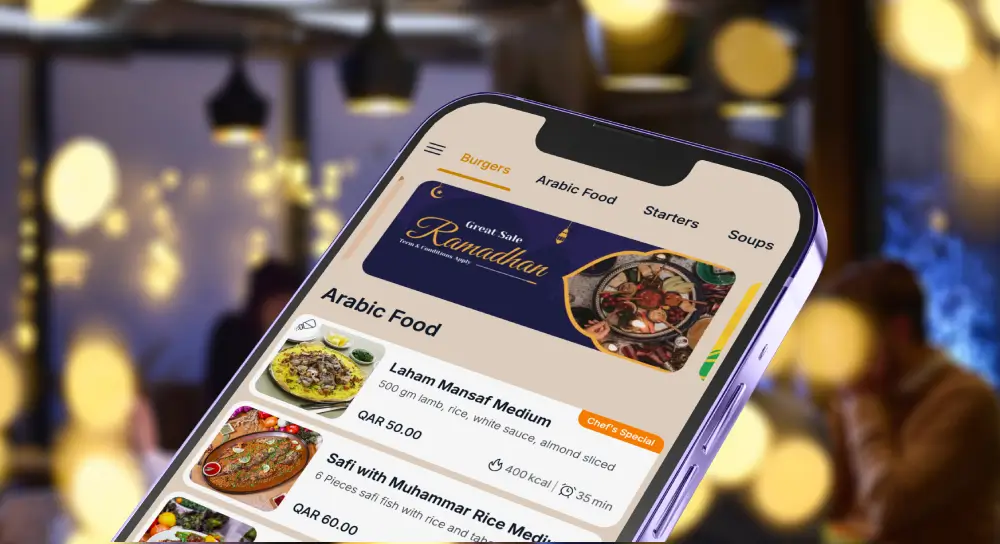
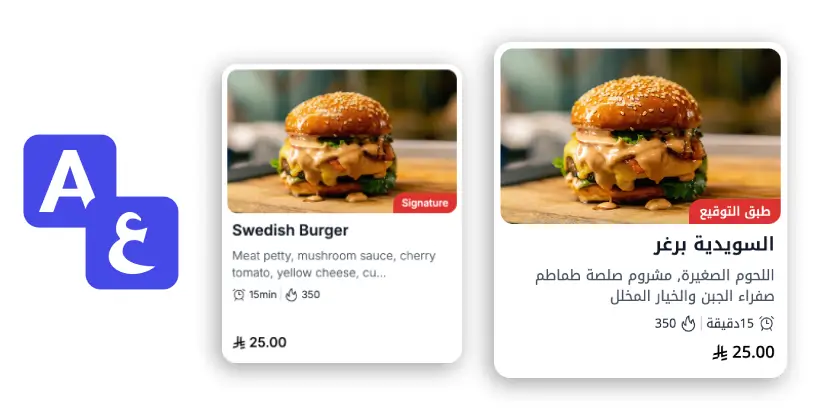
A modern QR menu is a live online menu, merchandising surface, and control panel in one. Guests scan, skim photos, switch Arabic or English, and pick modifiers in the same flow they use on their favorite apps. Picture a Riyadh business lunch: scan, filter for grills, choose mixed kebab with extra bread, check calories, confirm. Seconds, not minutes.
For operators, the control is the point. Push a kids’ menu on weekends, launch a Ramadan set menu at sunset, run a chef’s special for a limited window, and roll prices regionally without reprinting.
Compliance: what SFDA now expects on your menu
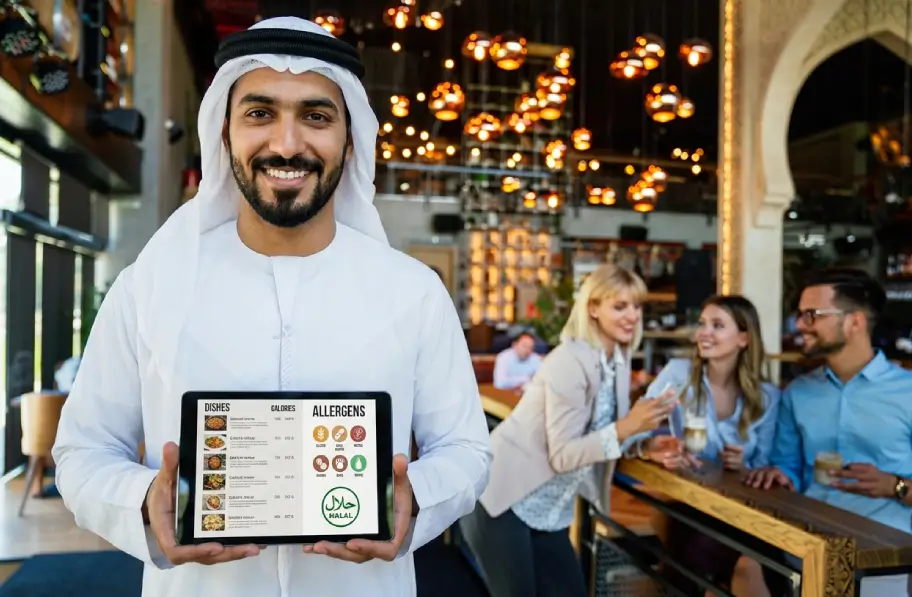
From 1 July 2025, Saudi restaurants and cafés must display detailed nutrition information on menus. Digital menus must match the clarity of printed menus. Your QR code menu should support:
- Calories and core nutrients shown near the item name or price
- Clear allergen labels without hunting
- Caffeine values for coffee, tea, and energy drinks
- An obvious high sodium tag where applicable
- Legible Arabic and English with proper contrast
If your current menu can’t do this, fix it before June 2026.
The TableQR approach for Saudi venues
TableQR focuses on hospitality-grade digital menus for KSA restaurants, cafés, hotels, and fine dining rooms. Guests don’t install an app. Teams receive print-ready QR files after design approval, which keeps projects moving.
Highlights for Saudi Arabia:
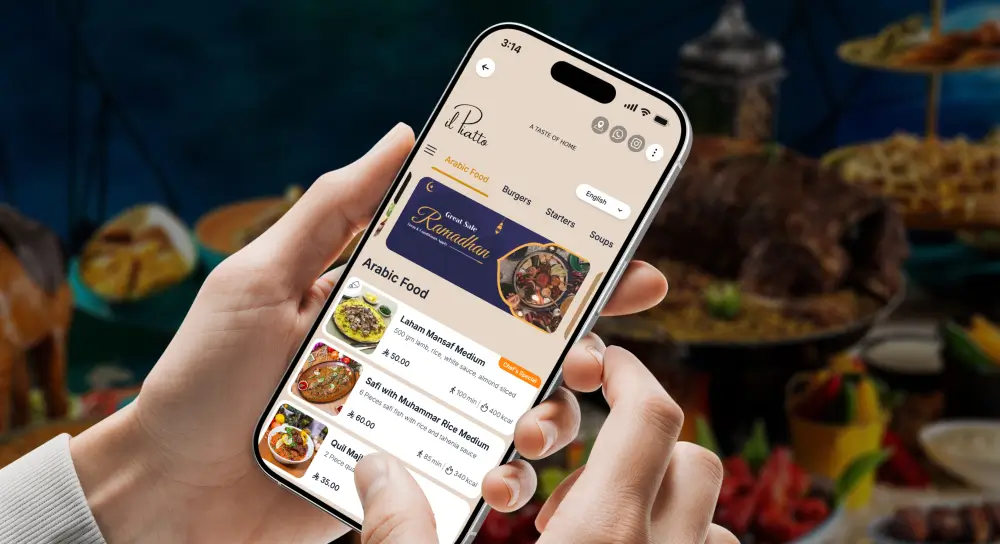
- Arabic-first with right-to-left rendering and an instant English toggle
- VAT-inclusive SAR pricing displayed cleanly
- Inline calories, sodium, allergen tags, and optional halal notes to support SFDA expectations
- Multi-branch control across Riyadh, Jeddah, Dammam, Makkah, and Madinah
- Fast loading on busy networks, plus quick filters such as Breakfast, Grill, or Juices
- Extras that matter: photo-forward categories, promotion badges, guest feedback, and simple tap analytics
A practical upgrade path for a Digital Menu in Saudi Arabia
Week 1: clean structure. List categories, add allergens and calories, define modifiers.
Week 2: soft-launch on a few tables. Watch taps, fix long descriptions, add missing photos.
Week 3: expand to all tables. Introduce a lunch set, a kids’ set, and a weekend-only seasonal item.
Week 4: tune merchandising. Pin two hero dishes and test an upsell such as add fries for SAR 9.
Ongoing: schedule Ramadan, school-holiday, and concert-night updates. Keep photos fresh and adjust category placement based on taps.
Saudi QR code menu: micro examples to borrow
Hotels: in-room QR that opens a read-only mobile menu with all-day dining hours, plus a second QR in the lounge for ordering.
Cafés: pin the seasonal latte and a pastry bundle on the first screen; show caffeine and calorie values to speed decisions.
Fine dining: offer a tasting menu view with pairings and chef notes; make discreet live edits without reprinting.
Tablet menu vs paper (and where phones win)
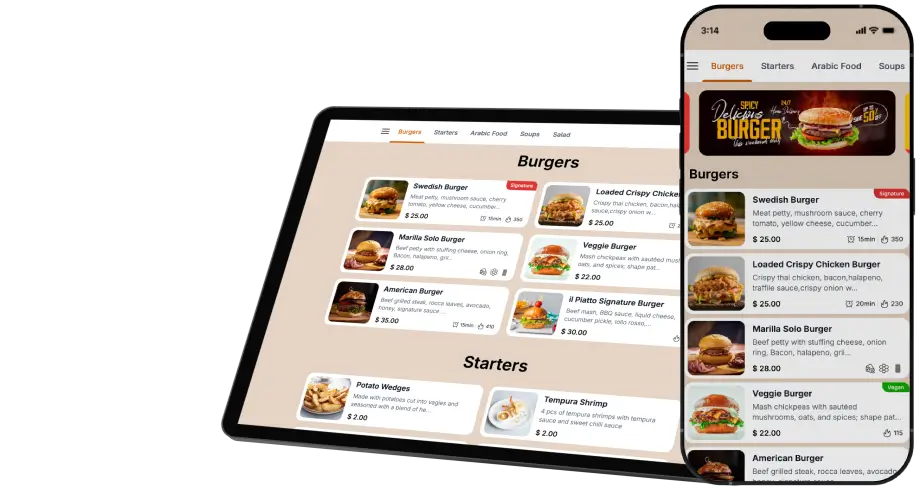
A tablet menu shines when you need richer visuals, long wine lists, or guided pairings in chef’s rooms and premium lounges. For scale, a phone-based mobile menu is faster to deploy, cheaper to maintain, and familiar to guests who prefer their own device. Many Saudi operators combine both: tablets for curated moments, QR menus for everyday speed.
Checklist for the show floor
- Performance: test load time on standard 4G inside the hall
- Arabic experience: verify right-to-left layout and clean Arabic typography
- Compliance: confirm inline calories, allergens, caffeine, and sodium flags
- Operations: check multi-branch edits, scheduling, and sold-out tags
- Branding: review fonts, photography, and category layouts
- Analytics: ensure item and category taps are visible without a data team
- Support: confirm rapid go-live with print-ready QR codes
Planning your show week
Before the show: finalize your QR menu structure and print five QR table toppers to demo. Prepare two 30-second pitches: one for speed and revenue, one for compliance and control.
During the show: run your menu on real phones, toggle Arabic/English, edit a price live, and add a one-day promotion while the buyer is watching.
After the show: send a follow-up with a live menu link, a short checklist, and a simple next step such as a 20-minute setup call.
FAQ
What is a digital menu
A digital menu is a structured online menu that guests open on their phones, often through a QR code. It supports images, modifiers, and live updates.
How is a QR menu different from a PDF
A QR menu is interactive, with filters, nutrition, and instant updates. A PDF is just a file.
Does a Saudi QR code menu help with SFDA rules
Yes. A compliant system displays calories, allergens, caffeine, and sodium indicators near each item so guests don’t need to hunt.
Can TableQR handle Arabic and English
Yes. It supports Arabic right-to-left and English with clean typography.
How fast can we go live
You can chat, approve a design, and publish quickly, with print-ready QR files provided. Many teams complete launch in a day. Hospitality-Grade Digital Menus in Saudi Arabia.
When and where is the Saudi Food Show 2026?
27–29 September 2026 at Jeddah Superdome. Confirm on the official site, as the 2026 edition reportedly changes city. Is the Saudi Food Show open to the public? No. It is trade only, for F&B professionals, operators, buyers and suppliers. Do Saudi menus need calories and allergen labels? Yes. SFDA requires nutrition and allergen information on printed and digital menus. A structured digital menu keeps this consistent across branches. See digital menu for Saudi restaurants.
WE BUILD IT. YOU SEE IT FIRST.
Send us your menu and let our team do the heavy lifting. We’ll build, brand, and translate a custom preview for your venue completely risk-free.