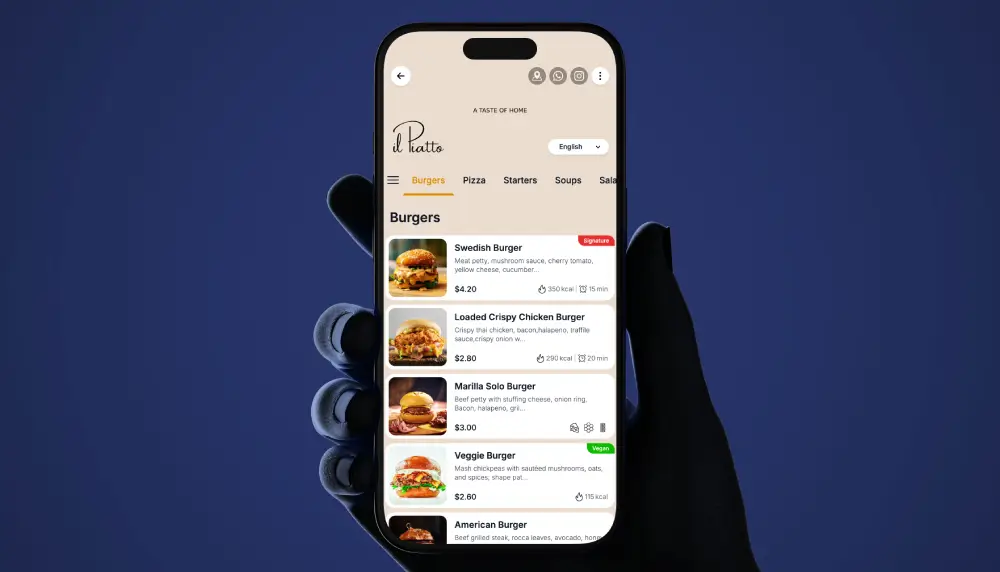
If you run a restaurant in the UAE, uae restaurant menu compliance is not just a food safety box to tick, Your menu is now part of your food safety file, and even how fast you can update your menu.
Municipalities are pushing harder on calories, allergens, halal visibility and VAT clarity, while large landlords and hotel groups quietly raise their own standards.
If your menu is slow to update or full of gaps, you are handing your competitors an easy win.
This article shows how to structure your menu content, especially on a digital QR menu, so UAE Food Code work becomes easier and inspections smoother. It is operational guidance, not legal advice. You always need to confirm details with your food safety consultant or authority.
Why compliance is now a sales problem in UAE F&B
Food safety used to live in the kitchen and storeroom. Now it walks straight into the dining room, because menus are expected to show nutrition, allergens and halal clarity in a way normal guests can understand.
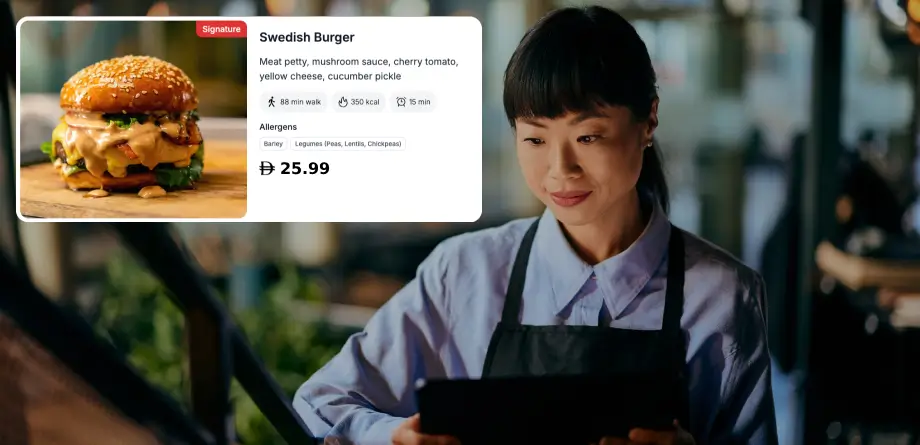
If your team cannot answer simple questions, like whether a dish is really nut free or if the price includes VAT, guests lose confidence instantly. Some will walk, some will never come back, and some will complain online.
Corporate clients and hotel partners are even tougher. They send audits, check menus against UAE guidelines, and expect your documentation to be consistent across every outlet. Slow menu change or missing data does not just risk a warning, it can cost you contracts.
So yes, compliance is now a sales issue in the UAE.
The four compliance pillars on every UAE menu
To keep things practical, think in four pillars for every menu, printed or digital.
- Calories per item
- Key nutrition fields
- Allergen visibility
- Halal clarity and supplier notes
If these four are structured properly, plus pricing and VAT wording, you are already far ahead of most operators.
Calories per item
Dubai Municipality has issued guidelines that push restaurants to show calories per menu item, linked to the National Nutrition Agenda. Requirements have been phased and adjusted, however the direction is obvious, calories belong on menus.
If you trade in Dubai, you should behave as if the Dubai menu calories requirement already applies to you, because inspectors, health consultants and mall management increasingly expect it, even when enforcement is still flexible.
At a minimum, you should be able to show:
- Calories per menu item, not per 100 g
- Same numbers everywhere, printed menus, QR Code menus, delivery menus
- A basic record of how the calories were calculated or provided
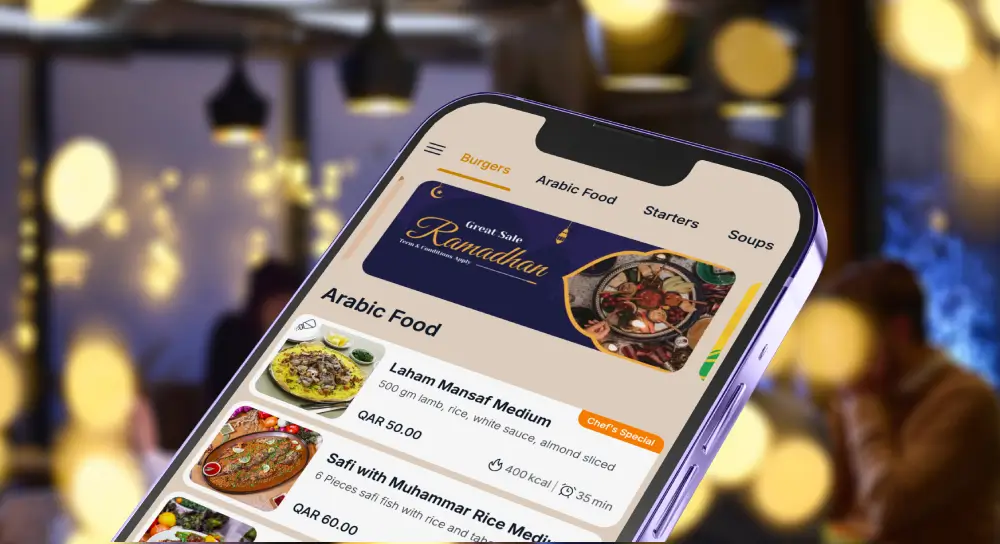
In a structured QR Code menu, those calories sit as fields on each dish, which means you can display them inline next to the price, in a separate info line, or in a detail view without redesigning your menu every time.
Key nutrition fields
Calories are only part of the story. UAE nutrition regulations for packaged foods push for clear information on fat, sugar, salt and other key values, and that mindset is gradually moving into food service.
For restaurants, you are rarely forced to print a full nutrition label on a plate of biryani, however inspectors may ask how you support any health or low calorie claims you make. If your menu says light, keto, low sugar or similar, you need the numbers behind it.
A sensible structure inside your Digital menu looks like this for each dish:
- Calories
- Total fat, saturated fat
- Carbohydrates, of which sugars
- Protein
- Sodium or salt
You may not show every field to guests, but you should at least store and control them. That way you can instantly add a nutrition section later if a group brand, diet partner or corporate client requests it.
Allergen visibility
The Dubai Food Code requires clear information about nine priority allergens, and it applies to unpackaged foods as well as packaged products. Allergen information must be available to consumers in restaurants, cafeterias and food courts.
That means uae allergens on menu is not optional anymore if you want to stay out of trouble.
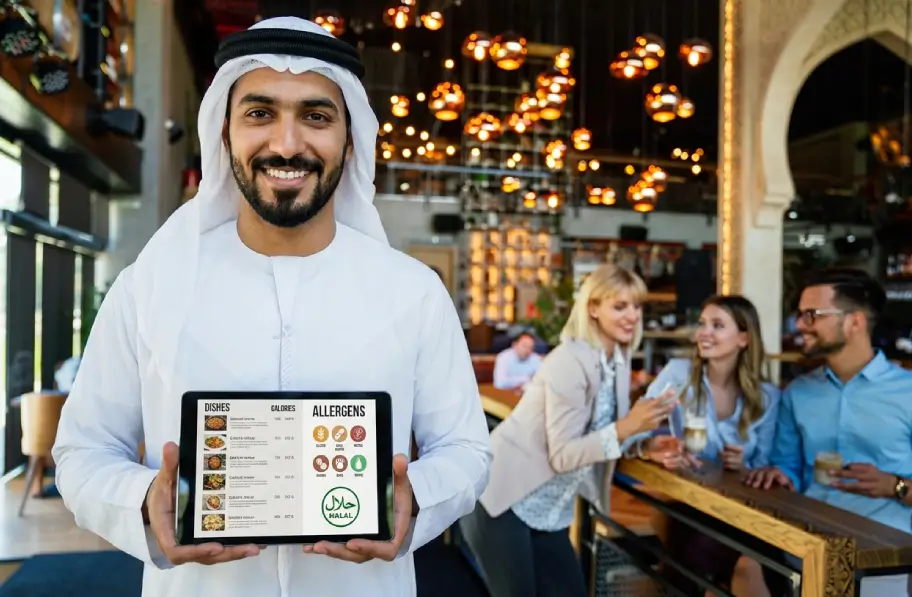
Those nine include crustaceans, peanuts, soy, tree nuts, sesame, fish, egg, milk and gluten. That list is short enough to be shown with simple icons or tags beside each dish in your Digital menu.
A practical approach:
- Tag each dish with all allergens it contains
- Allow guests to filter by allergen in the QR menu
- Keep back of house notes on cross contamination risk
This is where PDFs collapse. Once you export a static file, you cannot easily adjust icons, correct one allergen error, or roll out new allergen policies across ten outlets in one afternoon.
Halal clarity and supplier notes
Halal rules in the UAE are strict, and the Halal National Mark under the Ministry of Industry and Advanced Technology sits on top of several detailed standards.
For most restaurants, the real risk is not that you ignore halal completely. It is that your halal menu labelling uae is vague, inconsistent or not backed by supplier documentation.
At menu level you should be clear on:
- Which dishes are fully halal
- Which items use certified halal meat or poultry
- Where there is any alcohol in sauces or desserts
- Any items that are not halal, if you serve them
Behind the scenes, you need supplier records and certifications that support what you claim on the menu. A good QR menu platform should let you attach internal notes to each dish, for example the approved halal supplier code or certification expiry date, even if guests never see that part.
What inspectors and corporate clients actually want to see
Inspectors want to see that your team controls the menu data, not that you memorised one rule. They care about consistency, traceability and clear information to guests, in line with the Food Code and local guidance.
So they are likely to check things like:
- Are calories and allergens shown in a way guests can actually read
- Can staff explain how data is updated and who approves changes
- Do your menus match your actual recipes and supplier specs
Corporate clients like hotels, airlines and large offices look for something else on top, they want professional presentation, bilingual clarity and the ability to approve changes centrally. If you send ten different menu versions in ten formats, they instantly know your operation is messy.
Why PDFs and old printed menus fail compliance in practice
On paper, you can make a PDF menu compliant. In real life service it usually fails within a few weeks.
Here is why.
Every time you change a supplier, tweak a recipe, add a new combo or correct a typo, you technically need to regenerate the PDF, send it for approvals, print or upload it, and make sure every QR links to the latest version. That rarely happens perfectly.
Soon you have conflicting prices, missing allergen icons, wrong calories on some items and menus without the right VAT wording.
Printed menus have the same weakness plus extra cost. You delay changes, which means your printed menu and your actual offer drift apart, and that gap is exactly where inspection friction and guest complaints live.
How a structured QR menu solves these problems
A QR menu only helps if the data structure beneath it is solid. If it is just a fancy PDF in a browser, you have not fixed the problem.
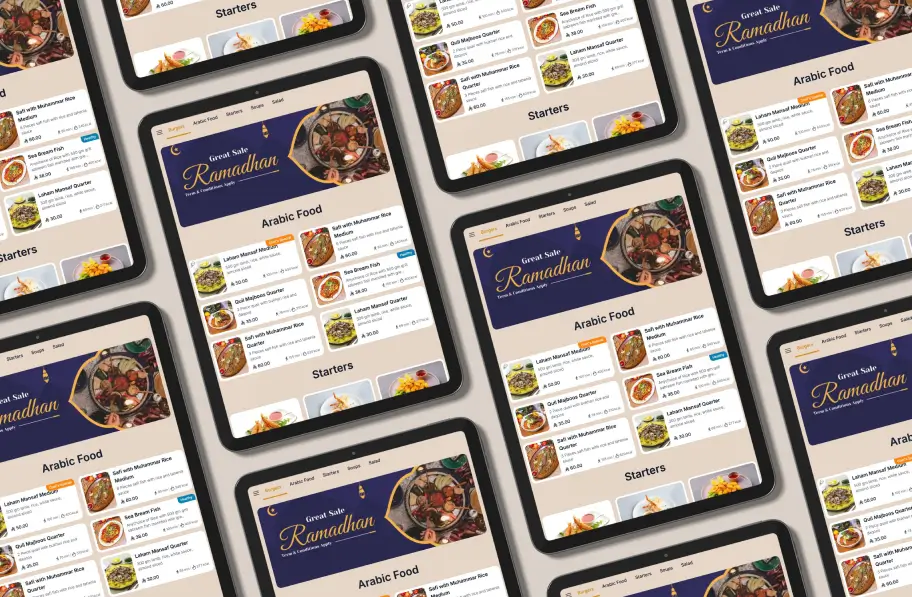
A structured system like TableQR attaches fields to each menu item, so the platform can display the same verified information in different ways, on mobile, web and even print ready exports, without retyping it.
Let us break it down.
Bilingual layout that respects UAE expectations
Regulators expect Arabic on labels and packaging, while Arabic and English together are strongly recommended to serve residents and tourists.
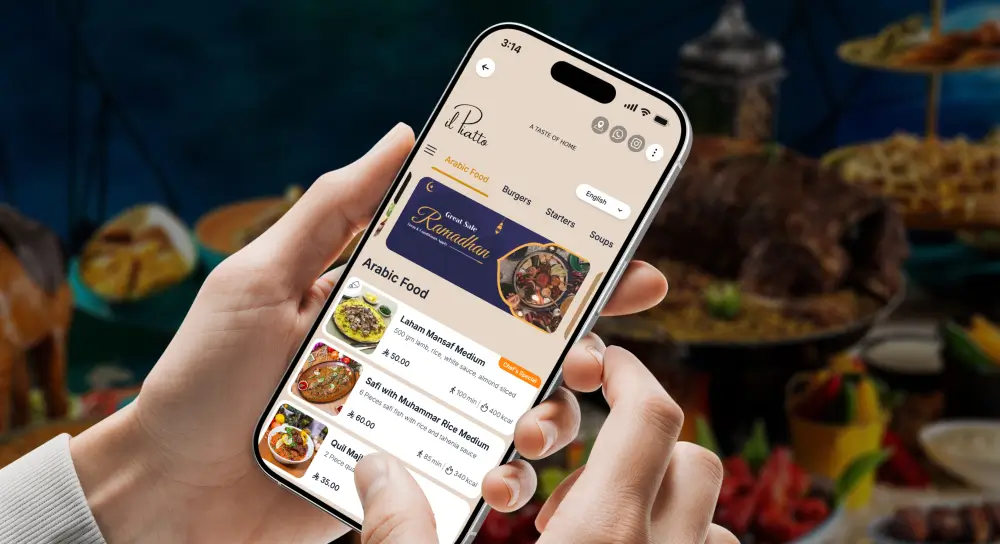
With a proper QR menu you can hold Arabic and English versions of each dish in one record, including description, allergens and notes. Your guest can flip language with one tap, and you avoid the common disaster where English is updated but Arabic is forgotten.
Inline calories and allergens without clutter
Because calories and allergens sit as fields in the menu database, you can choose how to show them: small text next to the price, icons under the dish name, or an expanded detail view.
For example, imagine a chicken mandi dish:
- 820 kcal, shown next to the price
- Allergen icons for milk and gluten just below the name
- A detail screen that lists full nutrition and a short halal note
You can change that layout across the whole restaurant in minutes, instead of editing fifty text boxes in a PDF.
Centralised price and VAT notes
VAT in the UAE is a standard five percent for most restaurant and hospitality services, and displayed prices must generally be VAT inclusive, with invoices showing the VAT amount clearly. (Protax)
The problem is not the tax rate, it is keeping your vat on restaurant menus uae consistent in every channel.
In a structured QR menu, you can:
- Flag whether prices are VAT inclusive
- Add a single VAT note that appears on every menu page
- Sync prices to printed menus and QR menus from one place
So when the finance team adjusts prices or adds a service charge, you update once, then the menu and the bill line up. That is what inspectors and auditors like to see.
Faster corporate approvals and updates
If you work with a hotel chain or a franchise group, you already know the pain of menu approvals. You send a PDF by email, someone marks it up, your designer tweaks it, then a new PDF goes around, sometimes to ten people.
With a structured QR menu, the workflow is cleaner:
- Outlet proposes dish and pricing changes
- Central team reviews changes inside the system
- Once approved, the live QR menu updates instantly
You cut days from the cycle and reduce the risk that an old, non compliant version survives in a forgotten PDF.
Quick self audit checklist for your current menus
Use this as a five minute reality check on your operation. No excuses.
- Can guests see calories for every regular menu item, at least on your QR menu
- Are allergens clearly visible for all dishes, not only on a separate sheet
- Do you have a simple way to prove your nutrition or calorie numbers if asked
- Is halal status clear by dish, and backed by supplier documentation
- Are Arabic and English both present and accurate on your menus
- Are your displayed prices consistent, and clearly VAT inclusive or marked with a VAT note
- Can you update all menus in your venue in under one hour if a supplier or price changes
If you answered no to more than two of those, your compliance is fragile, and a random inspection or new corporate client will expose it.
How TableQR fits into this picture
TableQR is a global QR code digital menu platform built for modern hospitality. You replace static printed menus with fast, mobile first digital menus that actually work during a rush.
Guests scan one QR code, then browse a clean, branded online menu that looks good on any phone or tablet and stays accurate throughout the day as your team updates items.
For UAE restaurants, cafes and hotels, we typically structure menus so that:
- Calories, allergens and halal notes live as fields on each dish
- Arabic and English text sit together, with easy language switching
- VAT notes and pricing rules are centralised, not buried in artwork
- Corporate or brand teams can review and approve changes centrally
You still own the content and the responsibility, however the platform makes uae restaurant menu compliance much easier to maintain.
Disclaimer
This article is for operational guidance. It is not legal advice. Always confirm with your food safety consultant or authority.
Ready to align your menu with UAE expectations
If you want to see how this looks in real life, your next step is simple.
See a live UAE compliant QR menu and notice how calories, allergens, halal notes and VAT wording all sit in one clean flow instead of scattered across PDFs.
Then, when you are serious about fixing your own menu infrastructure, talk to a menu specialist about aligning your menu with UAE expectations so calories, allergens, halal clarity and VAT wording stop being a constant headache and start supporting your sales.